Research · Accessibility · Conversational AI

I research and design accessible, trustworthy digital products, with conversational AI

I help product teams understand their users and build for the full range of people, not the average one. More than a decade taking accessibility from the standard to the real product, and now into AI agents too.

UX Research Accessibility (a11y) Conversational AI Product

Services

One practice, three ways to work together

All three answer the same question: does this work for real people and does it build trust? Research to understand them, accessibility to leave no one out, and conversational AI for where product is heading now.

Product research

Understand your users before you build and validate afterward. Evidence to decide, not data to justify.

  • Discovery: interviews and generative research
  • Usability testing and evaluation
  • Journey maps and insight synthesis
  • Prioritized recommendations
See detail →

Accessibility (a11y)

Design and research for the full range of people. More than a decade of experience behind every audit.

  • WCAG accessibility audits
  • Research with assistive technology users
  • Inclusive design from the start
  • Workshops for your team
See detail →

Conversational AI

Research and design for AI agents, where trust, tone and error handling decide whether people come back.

  • Conversational agent audits
  • Guardrails, bias and error handling
  • Accessibility in conversational interfaces
  • Responsible AI workshops
See detail →

Free self-assessments

Three tools to measure what almost no one evaluates well

I built them so your team can check, in two minutes, whether your conversational product is accessible, whether your use of AI is responsible and whether your bot actually resolves. No sign-up, no cost, with the detail of why each point matters.

Is your chatbot accessible?

An accessibility check for conversational interfaces on web and WhatsApp. You pick the channel and answer point by point; at the end you get a score and the prioritized gaps.

Based on WCAG 2.2

Open the tool

Is your AI responsible?

A responsible-AI self-assessment for user-facing systems: transparency, bias, privacy, human oversight and accountability.

Based on NIST and OECD frameworks

Open the tool

Is your bot doing its job?

A performance check for assistants in production: understanding, resolution, experience and trust. Twelve points and a per-axis score that shows where your bot is losing.

Production assistant metrics

Open the tool

Approach

Three principles that run through everything I do

Whatever the project: research, accessibility or AI. These three aren't up for negotiation.

01

Evidence

Decisions based on what people do and need, not on internal assumptions or the loudest opinion in the room.

02

Inclusion

Design for the full range of people, not the average user. A product that excludes isn't finished.

03

Trust

A product gets adopted when it's clear, usable and safe at once. I design for that adoption without giving up data protection.

Track record

Where this judgment was formed

It's not just accumulated experience: it's having worked where the standards are written, with international organizations, and in the classroom. That's what I bring to every project.

  • W3C standards

    I took part in W3C working groups, where the international standards for web accessibility are defined.

  • UNIT certification

    I contributed to the definition of UNIT's accessibility standard in Uruguay. I know from the inside the criteria used to certify against it today.

  • International organizations

    I've worked with teams at organizations like the IDB, the World Bank and the OAS, on service design and product projects.

  • Education

    Computer engineer, with master's degrees in Strategic IT Management and in Cybersecurity, and a PMP certification.

  • Teaching

    I teach Accessibility, User Experience and Service Design.

  • Reach

    More than a decade in the field. I work in Spanish and English, and also in Portuguese, with teams across LatAm, the United States and Europe.

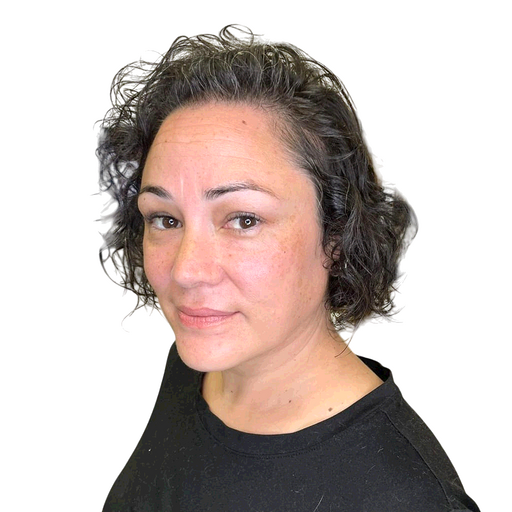
Portrait of Silvia Da Rosa

About

From engineering to the human side of product

I started in engineering, solving technical problems. Over time I understood that the hardest challenge isn't making the system work, but making it work for everyone: people who see differently, people who don't trust a machine, people who need a clear answer and not a maze. And that isn't only a matter of principle: a product more people understand, trust and that protects their data is a product that gets adopted.

From there I built a practice of research and accessibility: I dig deep to understand users and I design for the full range of people. More than a decade in accessibility gave me the eye to see what other teams overlook.

Today I bring that work into conversational AI too, where trust and clarity decide whether people come back. I work in Spanish and English, with teams across LatAm, the United States and Europe.
Collaboration network

I work with a network of specialists

Depending on what each project needs, I bring in trusted specialists. I contrast perspectives because a single point of view is a blind spot. These are the roles I call on.

Facilitation and innovation

When research reveals the problem isn't the product but how the team works, I bring in facilitation for co-creation processes and dynamics that move people, not just the interface.

Content design / conversational UX writing

When the audit shows the bot answers correctly but sounds cold or confuses people in error states, I bring in someone to rewrite those messages so the voice is clear, human and accessible.

Strategic communication

When the project ends with strong results but no one knows how to tell that story inside or outside the organization, I bring in someone to narrate the brand and its results clearly.

Quantitative research and fieldwork

When qualitative research needs backing at scale, I bring in someone who designs and supervises surveys, field studies and data-quality control with methodological rigor.

Products people understand and trust. That's where my work lives

Whether it's research, an accessibility audit or a conversational AI project, let's start with a conversation.

I write about research, accessibility and conversational AI on LinkedIn →

Contact

Get in touch

Write to me and I'll get back to you. I work remotely with teams across LatAm, the United States and Europe.

Book 30 minutes

Email
hola@silviadarosa.com
Location
Montevideo, Uruguay (UTC−3)
LinkedIn
linkedin.com/in/silviadarosa